


Score Big on Ammo Without Breaking the Bank
Running low on funds after a range day is a bummer, but cheap ammo keeps the fun going without draining your wallet. It’s simply factory-loaded or remanufactured cartridges sold at a lower price per round, often using lighter projectiles or simpler casings to cut costs. You can use it for plinking, practice drills, or zeroing a red 6.5x57mm Mauser Ammo for Sale dot, and it cycles reliably in most modern firearms. Just stick to reputable budget brands to get the same bang for a fraction of the cost.
What Actually Counts as Budget-Friendly Ammunition?
Budget-friendly ammo isn’t just the lowest price per box—it’s the lowest *reliable* cost per round, factoring in shipping and tax. Cheap ammo counts as budget-friendly when it feeds, extracts, and hits a consistent point of aim without causing preventable wear. Steel-cased or aluminum-cased loads are often the real threshold, especially in 9mm or 5.56, since they undercut brass by 10–20% while staying fine for range days. What actually counts is value, not just the sticker. A quick Q&A: “Is remanufactured ammo budget-friendly?” Yes, if from a reputable loader, but inspect each round for setback or cracked necks—saving money means nothing if you lose a gun to a squib. Skip novelty ultra-cheap brands with no track record; a hundred rounds of reliable “cheap” beats fifty malfunctions. Budget-friendly also means buying in bulk when shipping offsets the per-round cost, not hoarding exotic calibers.
Defining Value: Price Per Round vs. Overall Quality
The cheapest price per round often masks hidden costs, as erratic primers or inconsistent powder charges can ruin a range session, forcing you to reshoot groups and burn more ammunition. Defining value requires weighing that per-round savings against overall quality and reliability, since a malfunction every fifty rounds might negate the discount entirely. A mid-tier option that cycles flawlessly and holds tight groupings offers better practical value than a bottom-dollar box that fails to feed or produces keyholing. For defensive practice, budget ammo must mimic duty loads’ point of impact; otherwise, you train with false confidence. Calculate cost per hit, not cost per cartridge, by factoring in malfunction clearance time and wasted range fees.

True budget value emerges when low price per round meets dependable ignition, consistent accuracy, and reliable feeding—otherwise, the savings disappear into wasted ammo and lost .338 Lapua Ammo for Sale training efficiency.
Brass, Steel, or Aluminum: Which Case Saves You More?
When chasing cheap ammo, the case metal dictates both upfront price and long-term value. Steel cases save you the most per box, often running 10–20% cheaper than brass, but they’re non-reloadable and can wear extractors faster due to tougher polymer coatings. Aluminum, like the 9mm from Federal, splits the difference—lighter, slightly pricier than steel, but still non-reloadable, making it a poor choice if you plan to reuse components. Brass costs the most initially, yet its reloadability cuts per-round cost dramatically over multiple firings. For pure one-and-done shooting, steel wins; for total cost-per-trigger-pull across batches, brass saves more. Aluminum only makes sense if you find it on deep clearance.
Q: Which case saves you more for bulk practice? Steel, because its lower sticker price offsets the fact you toss it after one use—brass only beats it if you handload.
How to Spot Reliable Cheap Rounds Without Getting Duds
The trick to finding cheap ammo that won’t let you down is to hunt for reliable cheap rounds through batch testing, not just price tags. I learned this after buying a dusty crate of bargain .223 that keyholed every shot—a dud lesson in haste. Instead, I now buy one box from a new lot, run a function check across different firearms, and inspect the brass for cracks or crooked .32 Win Special Ammo for Sale primers before committing to a bulk order. Stick to brands with consistent crimp depth, as loose projectiles are the first sign of sloppy manufacturing. I also shake the box—rattling rounds mean powder shift, a red flag for weak charges. For cheap ammo, the real secret is shooting twenty rounds first; if they cycle clean and group tight, that lot is your goldmine, even if the logo is unfamiliar.
Key Signs of Consistent Primer Ignition and Powder Burn
Consistent primer ignition in cheap ammo manifests as uniform, crisp trigger reset response with zero perceptible delay between strike and report. Reliable powder burn appears as stable muzzle velocity, evidenced by tight shot groups at fixed distances rather than flyers. Examine spent casings: even, sooty carbon rings around the primer pocket indicate proper sealing, while flattened or cratered primers signal overpressure. Internally, consistent burn leaves minimal unburnt flakes and a clean chamber face. If every round cycles the action identically and locks back on empty, the powder charge is burning predictably. Reject batches showing random hang-fires or pressure spikes—these telegraph inconsistent ignition compounds.
- Uniform primer strike indentation depth across all test-fired rounds
- Absence of smoky residue or unburnt powder granules in the action
- Consistent case expansion and ejection pattern .35 Remington Ammo for Sale (same distance and direction)
- No audible variation in report pitch between rounds from the same box
Why Bulk-Packed Ammo Often Shoots Fine for Range Days

Bulk-packed ammo earns its discount through simplified packaging, not shaky powder loads, which is why it routinely holds tight enough groups for steel and paper. Since these rounds skip expensive individual trays, manufacturers still run them on the same high-speed presses, meaning your cost-per-round drops while the burn rate and bullet seating stay consistent. For typical 10-to-25-yard range work, that slight variance in neck tension or OAL simply doesn’t translate into misses—your own trigger control matters far more. The real trick is buying one box first to chronograph a few shots; if velocities stay within 30 fps, the rest of the case will hammer reliably. Bulk ammo’s accuracy ceiling is plenty for drills, so you’re paying for fewer frills, not fewer hits.
Bulk-packed ammo shoots fine for range days because the savings come from packaging, not propellant quality, and 6.5x57R Ammo for Sale minor case inconsistencies vanish at typical practice distances.
Where to Find the Best Deals on Low-Cost Cartridges
The best starting point for chasing cheap ammo is a dedicated online aggregator like AmmoSeek, which scans dozens of retailers in real time. I’ve watched local gun shops mark up low-cost cartridges by 20%, while the same box sits at a major online warehouse for less. Sign up for email alerts from three or four bulk sellers, and check their “clearance” pages weekly—that’s where overstock and odd-lot rounds get slashed. For best deals on low-cost cartridges, don’t ignore manufacturer direct sales, especially during holiday weekends, when they drop free shipping thresholds. Also, buying in cases of 500 or 1,000 rounds nearly always beats per-box pricing, even with delivery fees. Finally, use cash-back apps like ActiveJunky for an extra 2–5% rebate, turning a good price into a great one without any haggling.
Online Retailers vs. Local Big-Box Stores: Hidden Price Differences
Online retailers often advertise lower per-round prices than local big-box stores, but the hidden gap emerges at checkout. A local store’s sticker price includes no shipping, handling fees, or minimum-order thresholds, so a single box of low-cost cartridges can be genuinely cheaper there. Conversely, online deals only materialize when you buy bulk quantities to absorb flat-rate freight charges, which big-box stores never impose. Additionally, online vendors frequently add “hazmat” surcharges that are absent from the shelf tag at a physical retailer. Before assuming the web wins, calculate the true landed cost per round. That calculation reveals the real price difference between online and retail, often flipping the apparent bargain.
Using Ammo Subscription Services to Lock in Lower Rates
Subscription services from major retailers like Target Ammunition for Sale Sports USA or Bucking Horse Outpost let you lock in lower per-round rates by pre-committing to a scheduled case delivery. The core savings come from bypassing per-order handling fees and qualifying for free bulk shipping, which often offsets the membership cost after two or three deliveries. To make this work, you must calculate your actual monthly round count, then choose a tier (e.g., 8 or 12 boxes monthly) that matches your range frequency, not your wishlist. Since prices are fixed at checkout for that shipment cycle, you avoid mid-year spikes, but you still need to cancel or adjust before the renewal date if your stockpile is already sufficient. This approach only pays off when you consistently shoot those rounds; otherwise, storage and idle capital erode the discount.
- Compare the per-box price after the subscription discount against your local store’s sale price including tax.
- Choose a plan that allows skipping a month without losing accumulated loyalty discounts.
- Set a calendar reminder three days before auto-renewal to pause or alter your calibers.
Practical Tips for Stretching Your Shooting Budget Further
To stretch your shooting budget with cheap ammo, buy in bulk during seasonal sales and split cases with a friend to slash per-round shipping costs. Focus on practice with low-recoil, budget-friendly calibers like 9mm or .22 LR, reserving premium rounds only for zeroing or carry. Reloading once-fired brass from your cheap ammo batches can cut future costs by up to 40%, but start with a simple single-stage press to avoid over-investing. Also, track your shots per session—wasting 50 rounds on unfocused drills is still waste, even at bargain prices. Q: How do you make 6.5×55 Swedish Ammo for Sale cheap ammo last longer? A: Shoot slow, deliberate reps for accuracy, then speed drills only with dry-fire practice first. Finally, clean your firearm after every cheap ammo outing to prevent carbon buildup from reducing reliability and wasting rounds on malfunctions.
Matching Cheaper Loads to Your Firearm’s Recoil Spring Weight
When you switch to budget-friendly ammo, you’ll often notice it feels softer or snappier than your usual loads. That’s because cheaper rounds can run lighter or hotter, messing with your firearm’s cycle. Matching cheaper loads to your recoil spring weight keeps things reliable. If your gun jams with light target ammo, try a lighter recoil spring to let the slide move fully. For hot bargain loads, go heavier to slow the slide and reduce felt recoil. Follow this quick sequence:
- Test a box of your cheap ammo and note any failures.
- Buy a spring one step lighter or heavier than stock.
- Swap it in and fire 50 rounds to confirm smooth ejection and lock-back.
Adjust gradually—a 1–2 pound change is usually 6.8 SPC Ammo for Sale enough to fix cycling without beating up your frame.

How to Test a Small Batch Before Buying a Full Case
Before committing to a full case of cheap ammo, buy two or three boxes from the same lot number and run a **small batch reliability test**. Shoot at least fifty rounds through your actual firearm, mixing magazine types and shooting speeds to mimic real conditions. Check for consistent ejection patterns, primer strikes, and point-of-impact shifts at your typical distances. Track any failures to feed, fire, or extract—if you see more than one or two issues, the case will likely amplify those problems. Also, measure velocity variance if you have a chronograph, since inconsistent powder charges are common in budget loads. A fifty-round test https://specialtysportsandsupplyltd.com/ costs little compared to a case’s worth of frustration.
Q: How do you know if a small batch passed the test?
A: It passes if you get zero stoppages, acceptable accuracy for your intended use, and no dirty residue that jams your action after just one session.
Common Accuracy and Functionality Myths About Discounted Rounds
The myth that discounted rounds are inherently inaccurate ignores that most cheap ammo fails on consistency, not precision—a bolt gun may still print tiny groups, but velocity swings from mixed lots will shift your point of impact at distance. Functionality fears, like “budget brass will jam,” usually stem from underpowered reloads or corroded primers, not the price tag itself. I’ve watched a box of bargain .223 cycle a finicky AR flawlessly while premium hunting ammo choked on a dusty chamber, proving that storage and firearm tolerance matter more than cost. The real story is that “cheap” often means unglamorous manufacturing, not unsafe or broken—just test a few brands before trusting them for a match. The strongest misconception is that accuracy requires premium bullets, yet many discount FMJs group under an inch at 100 yards when your rifle and shooter are steady. Functionality, meanwhile, is sabotaged more by dirty firing pins or weak extractor springs than by the ammo’s discount status.
Why Some Inexpensive Hollow Points Still Expand Reliably
Price does not dictate hydraulic physics. Inexpensive hollow points can expand reliably because expansion depends on the bullet’s .32 ACP Ammo for Sale core material, jacket design, and impact velocity, not the retail tag. Budget manufacturers often use soft lead cores and a thin copper jacket with a large hollow cavity—engineered to deform consistently at standard defensive velocities (850–1,100 fps). A low-cost round from a reputable load may lack polished cases or crimp perfection, yet the mechanical expansion threshold is reached at modest speed. The secret is the skived jacket nose, which creates weak points that peel back uniformly upon fluid pressure. Fluted or serrated cavities also reduce the force needed to initiate expansion. Q: Why do cheap hollow points sometimes expand better than premium ones? A: The expansion is driven by tip geometry and jacket thickness, not price; a thinner jacket at the rim collapses more easily, while premium bonded cores often resist deformation at lower velocities—making budget rounds surprisingly effective.
Understanding Velocity Variations in Budget-Friendly Plinking Loads
In budget-friendly plinking loads, velocity variations stem from powder charge tolerances and case fill consistency rather than bullet quality alone. Expect extreme spreads of 40–80 fps across a box, which shifts impact points by roughly 0.5–1 inch at 25 yards—negligible for steel targets but critical for precision drills. To manage this, chronograph your specific lot and record the average; then zero your optic using the slowest rounds to avoid surprise fliers. Lot-to-lot temperature sensitivity also alters burn rates, so store ammo at a stable temperature and re-check zero when seasons change.
- Fire a 10-shot string to calculate the true standard deviation before adjusting sights.
- Use the slower extreme as your baseline for holdover at longer plinking distances.
- Segregate rounds by muzzle velocity if you need tighter groups for a friendly competition.
Best Calibers and Grain Weights for Maximizing Savings
To maximize savings with cheap ammo, prioritize 9mm Luger with 115-grain full metal jacket loads, as this combination is universally produced in massive volume, keeping per-round costs at the floor. For rifle practice, .223 Remington in 55-grain soft-point or FMJ offers the best balance of affordability and reliability, since bulk packs of this weight are the industry standard. Avoid heavier 124-grain or 62-grain options—they cost more per box and deliver no practical benefit for feeding drills or paper punching. Stick to the lightest standard weight in any caliber, because manufacturers price these as loss leaders, and your savings compound with every 500-round case. Skip premium defensive loads entirely; cheap plinking ammo with these specific grains ensures your trigger time doesn’t drain your wallet.
9mm, .223, and .22 LR: Where the Per-Round Costs Drop Most
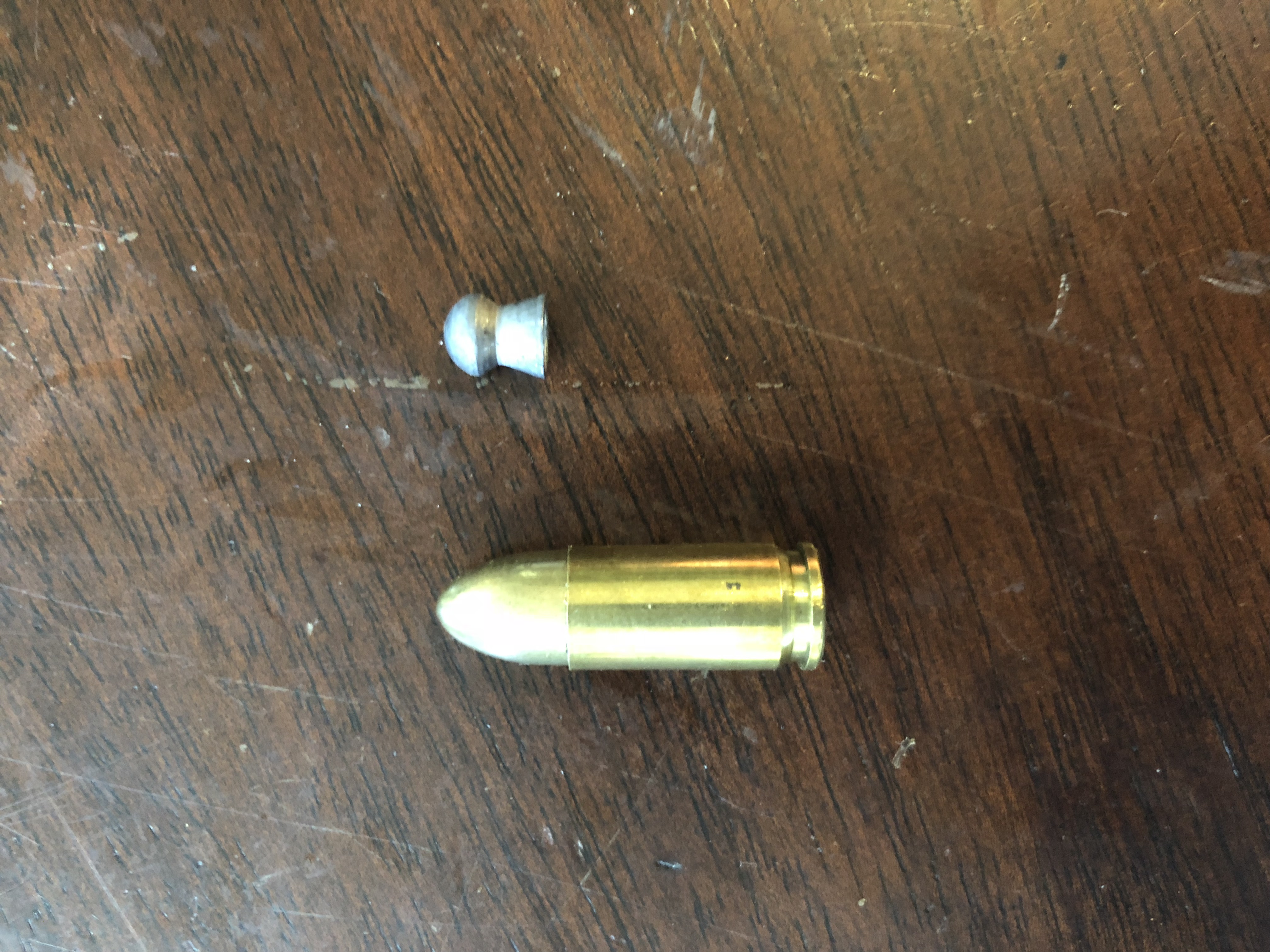
When you’re stacking cheap ammo, the biggest per-round drops happen at 9mm, .223, and .22 LR, but at very different price floors. The steepest cost drop for 9mm and .223 comes when you buy in bulk (500+ rounds), where 9mm often falls below $0.25/round and .223 drops toward $0.40–$0.45/round—compared to $0.35 and $0.60+ for single boxes. .22 LR, though, already bottomed out around $0.06–$0.08/round even in small bricks; buying 1,000+ rounds only shaves a cent or two more. So, for 9mm and .223, the drop is dramatic with volume, but .22’s savings are front-loaded.
- 9mm: 500-round cases cut per-round cost by 20–30% vs. 50-round boxes.
- .223: 1,000-round bulk orders drop price below $0.45/round, versus $0.60+ for loose packs.
- .22 LR: 500–1,000 rounds push you under $0.07/round, but smaller bricks already save heavily.
Choosing the Right Bullet Type for Practice vs. Self-Defense
For practice, stick with **full metal jacket (FMJ) rounds**—they’re the cheapest bullet type and feed reliably in most guns. Reserve hollow points or other expanding defensive loads for carry, since they cost nearly double and you won’t shoot them as often. A smart move? Run a few boxes of your exact self-defense rounds through your firearm each year to confirm function, but do the bulk of your training with budget FMJ. That way, you save cash without sacrificing proficiency.
Q: Can I practice with the same bullet type I carry?
A: Sure, if you’ve got cash to burn—but for most folks, it’s overkill. Use FMJ for reps and save your pricey defensive rounds for occasional reliability checks.